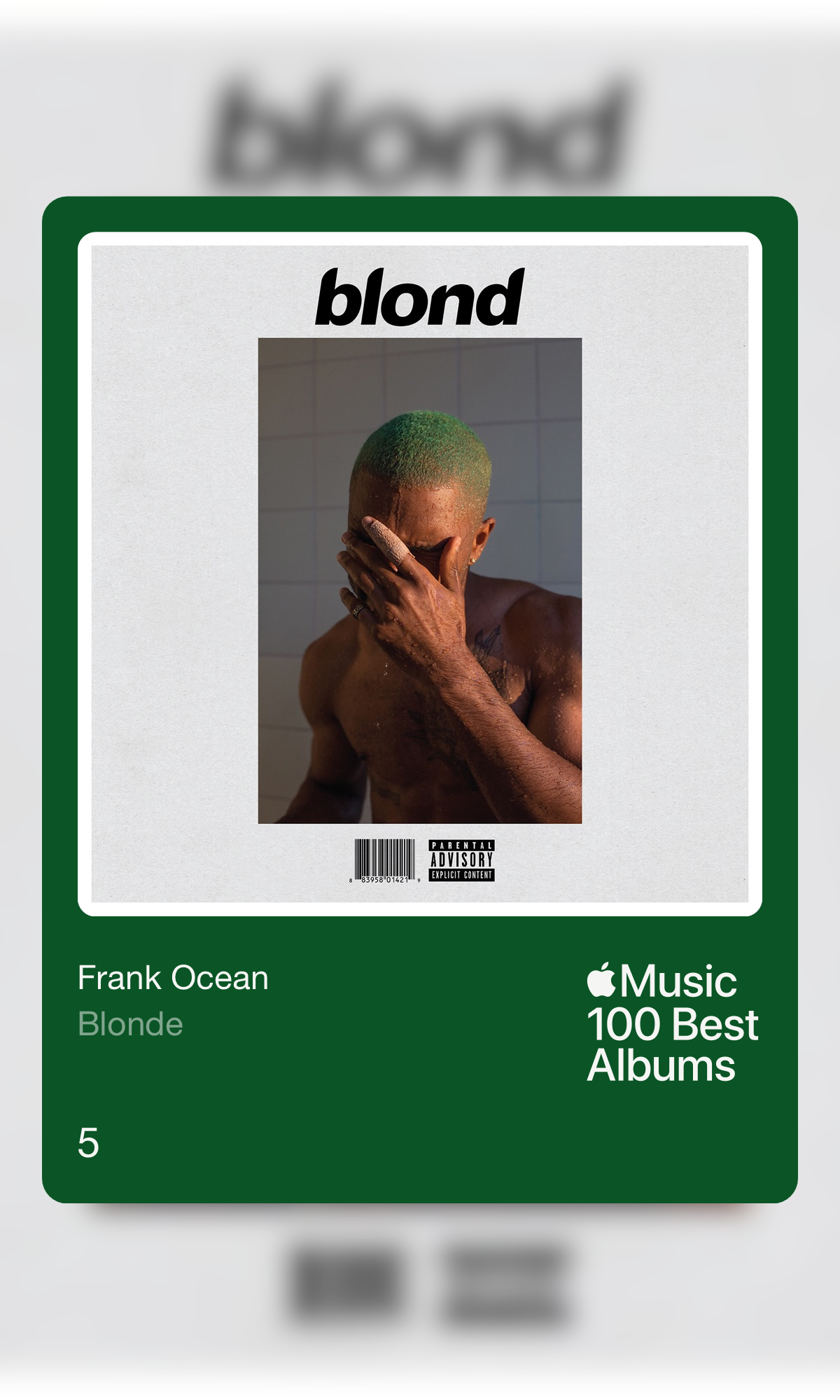
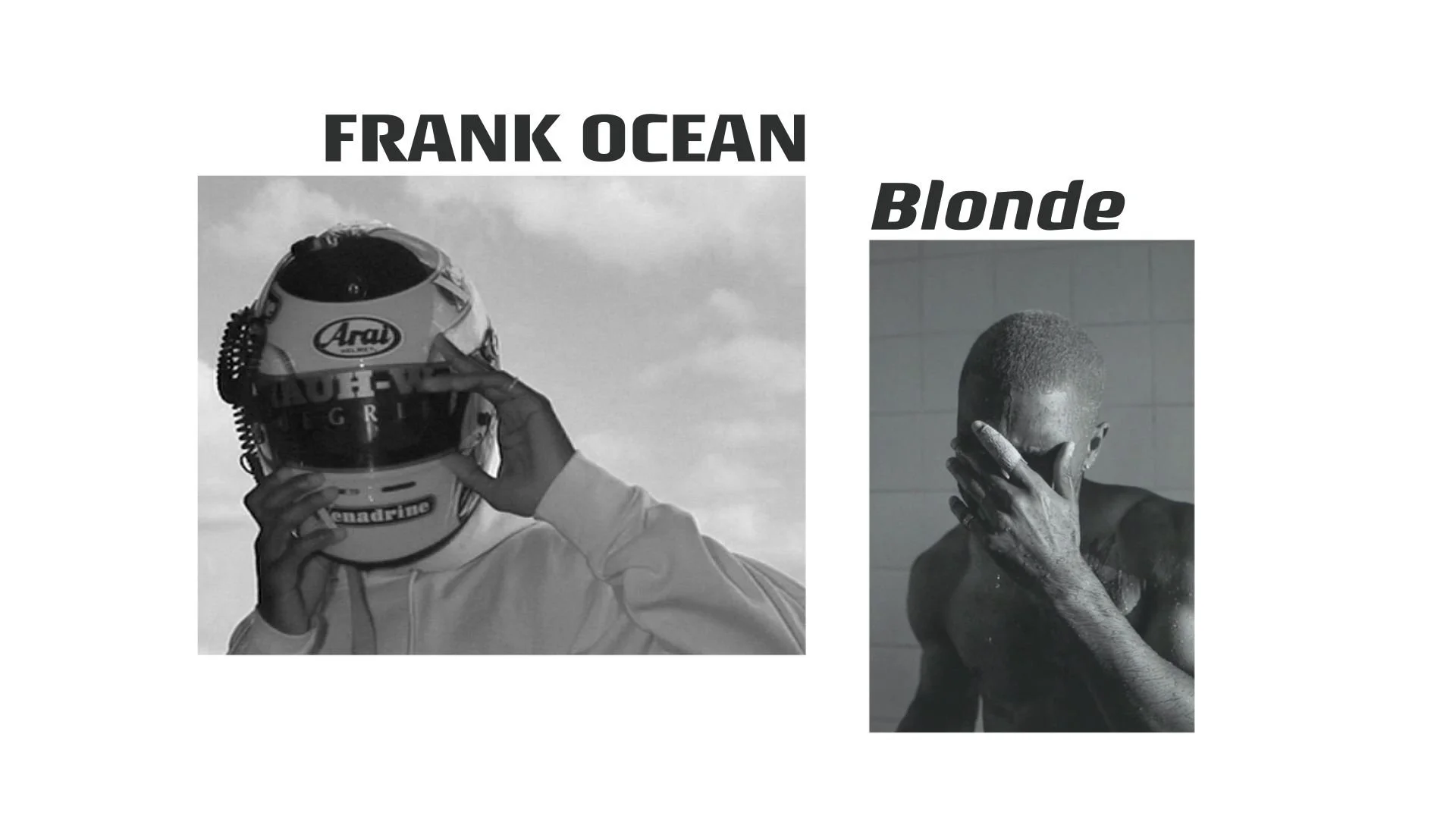
‘Pitchfork’ ranks ‘Blonde’ #1 album of 2010s, ‘Channel Orange’ #10

Pitchfork has ranked the best 200 albums of the 2010s, with two of Frank Ocean’s records placing in the top 10, including the number one spot. After a decade filled with many incredible projects, the outlet known as “the most trusted voice in music” has essentially crowned Ocean as its defining artist.
A letter from editor Puja Patel offered background on how Pitchfork assembled the lineup.
The making of these lists took close to six months and included multiple rounds of voting, several meticulous spreadsheets, a Slack chat channel devoted to staff debates around certain albums and songs, and an existential discussion about whether a late 2009 release could be included due to the weight of its impact landing in 2010. We spent hours upon hours revisiting incredible music and hearing it with new perspective, and had thoughtful and dizzying conversations about the cultural significance of a piece of music next to the complexity of its craftsmanship and the feelings it evokes. And then there were the weeks of meetings between editors to painstakingly decide what landed where.
Jordan Sargent wrote the blurb for #10, Channel Orange:
Christopher Breaux began the decade as a recent transplant to Los Angeles who’d written a few minor songs for Justin Bieber and Brandy. He will end it as Frank Ocean, not just one of the most acclaimed musicians of his time but a trailblazer for artists’ autonomy and their freedom to express their sexuality. His legacy on the former was secured when he delivered one album to Def Jam and sold another immediately to Apple. The latter came years earlier when he published an open letter on Tumblr in which he came out as queer, one of the first men in R&B and rap to do so. But the album that accompanied that letter, Channel Orange, was not crafted to echo what ended up becoming a major cultural moment.
Instead, Ocean’s studio debut is an unassuming, languid record; its drums shuffle along softly, cushioning Ocean's weightless vocals. It’s queer, too, in its own pure, nascent way: Across the span of an hour, Ocean slips into different narrative roles, including father, trust-funder, drug addict, Egyptian king, rock star. The act of inhabiting someone you are not is inherent to the queer experience; after all, pretending to be straight is nothing if not the assumption of a persona. Perhaps this informs Ocean’s richly observed characters, especially the subversive closer: On “Forrest Gump,” Ocean imagines himself within that movie’s universe, cheering on the well-meaning galoot playing running back. He sings of his fingertips and lips burning as he chain-smokes through his nerves, ending with a lilting outro—“Forrest green, Forrest blues/I’m remembering you/If this is love, I know it’s true/I won’t forget you”—that captures the peculiar, melancholic longing of the closet. His tenderness is unforgettable; even the second half of “Pyramids,” told from a pimp’s perspective, foregrounds the humanity of the woman who works for him. Channel Orange, above all, suggests the work of a profound empath, and in the seven years since its release, Ocean has shown himself to be nothing if not that.
Doreen St. Félix wrote the #1 album’s description, Blonde:
In 2016, the hinge year of a grotesque age, Frank Ocean’s cars were his confessional booths. They included a white Ferrari and a BMW X6; the Bugatti “left some stretch marks on the freeway,” as he remembers listlessly. To Ocean, the car is an Americana icon of certain ideals: freedom that turns solipsistic and reckless; materialism we worship as artistry; barrel-chested masculinity, queered on backroads. Above all, transience.
Frank Ocean is the hinge artist of our time, the true voice of a generation because he takes long silences. With Blonde and its attendant works, his Boys Don’t Cry zine and Endless, he took his time building his staircase to somewhere. Elusive and independent, he weaves from genre to genre, sometimes shifting gears to obliterate category altogether, as he cruises past the conventions the culture still fears to let go. On Blonde, the languid guitar of surf rock coexists with soft doo-wop melodies; Frank the rapper—who is heady and occasionally, knowingly vulgar—coincides with Frank the singer, who is plaintive and longing. Sometimes, he just talks rhythmically, like in “Nights.” “Futura Free,” the triptych anchor of Blonde, moves from midtempo to atmospheric synth to a clanging guitar solo. The impressionistic lyrics mirror the feeling of wanting to disappear, for a spell: “Breathe till I evaporated/My whole body see through.”
Songs evaporate on Blonde, too: they’re hazed, minimalist, capricious. The sweet, airy strum of “Pink + White” is hardened by its last few seconds, as we hear birds swarm. So, too, in “Ivy,” which starts off a masterpiece of cinematic lovesickness and then warps at its tail-end, ceding to a clang of instruments. The slight touches of distortion on Blondecall attention to impermanence, the trap of artifice, and, distantly, death. But Ocean is never sanctimonious; the whole point of existence is that a dark musing on morality can—and should—be interrupted by soft flesh, a sticky plant, a designer shirt. Live a little. Live too much. Because he is a writer first, he kinks his voice to suit his characters and his stories: On his cover of Stevie Wonder’s “Close to You,” a song about the fear of solitude, he multiplies and increases. On “Seigfried,” as he considers settling down for “two kids and a swimming pool,” his warble is warm, fragile, and resigned; then he almost shrieks, “I’m not brave!” It is an ache, a primal tearing of a social contract each generation learns is a lie.
The year 2016 crystallized the political disaster right under the surface. People theorized that we needed anthems to get us through the dark night. Big choruses, hooks as wide as highway signs, regular percussion that could gird us from chaos. But our mood was languorous; jingoism was the problem in the first place. We wanted the blurred, the softened, the existential. “Inhale, in hell, there’s heaven,” Ocean sings on “Solo,” capturing the whiplash experience of being young in this country in one line. Blonde is one synonym for American
See the rest of the “200 Best Albums of the 2010s” at Pitchfork.com.
Related Articles: