Romain Gavras writes comic “Le Go Fast” in Frank Ocean’s magazine
“Le Go Fast,” Boys Don’t Cry, p. 99, pnl. 1.
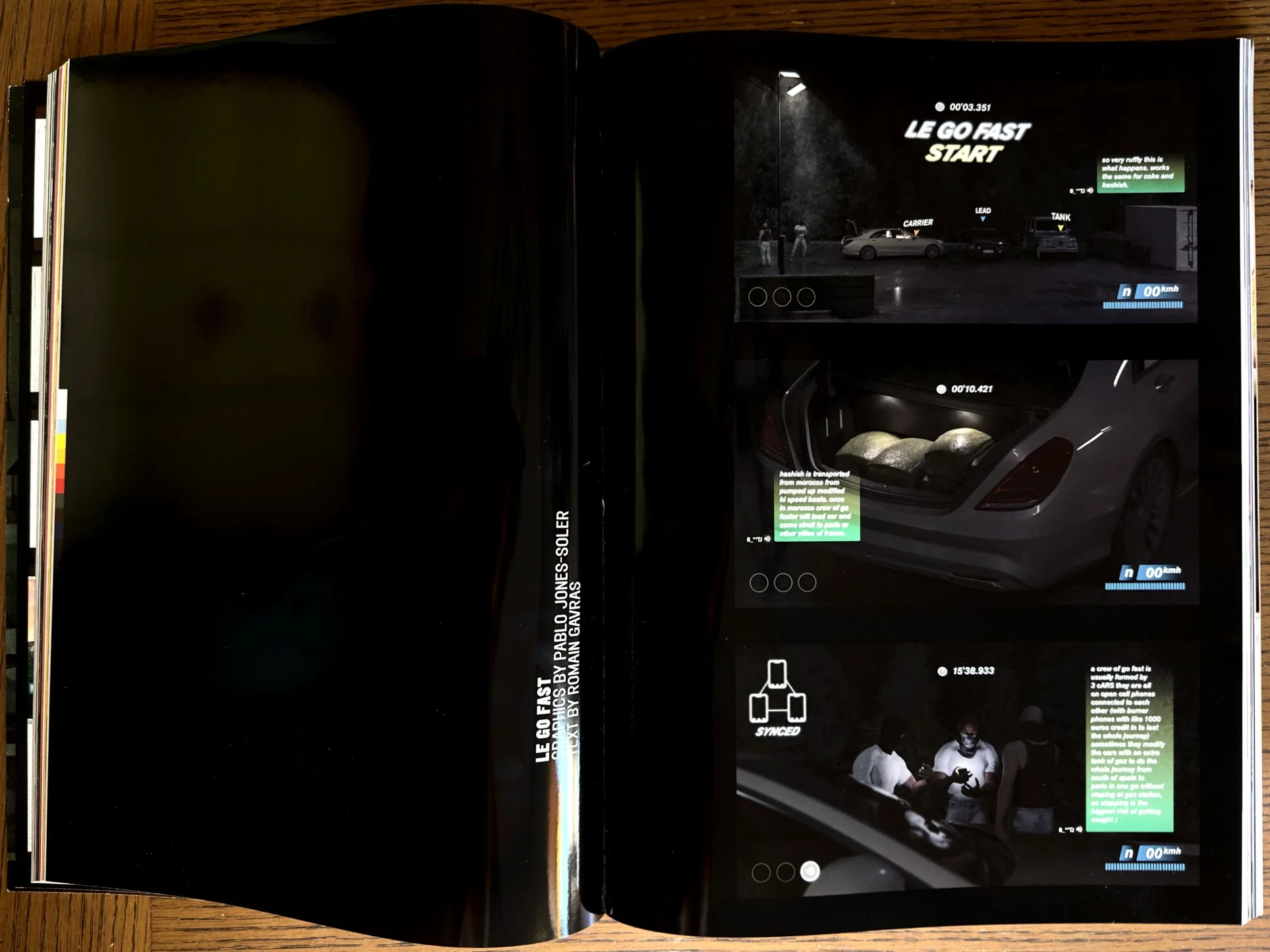
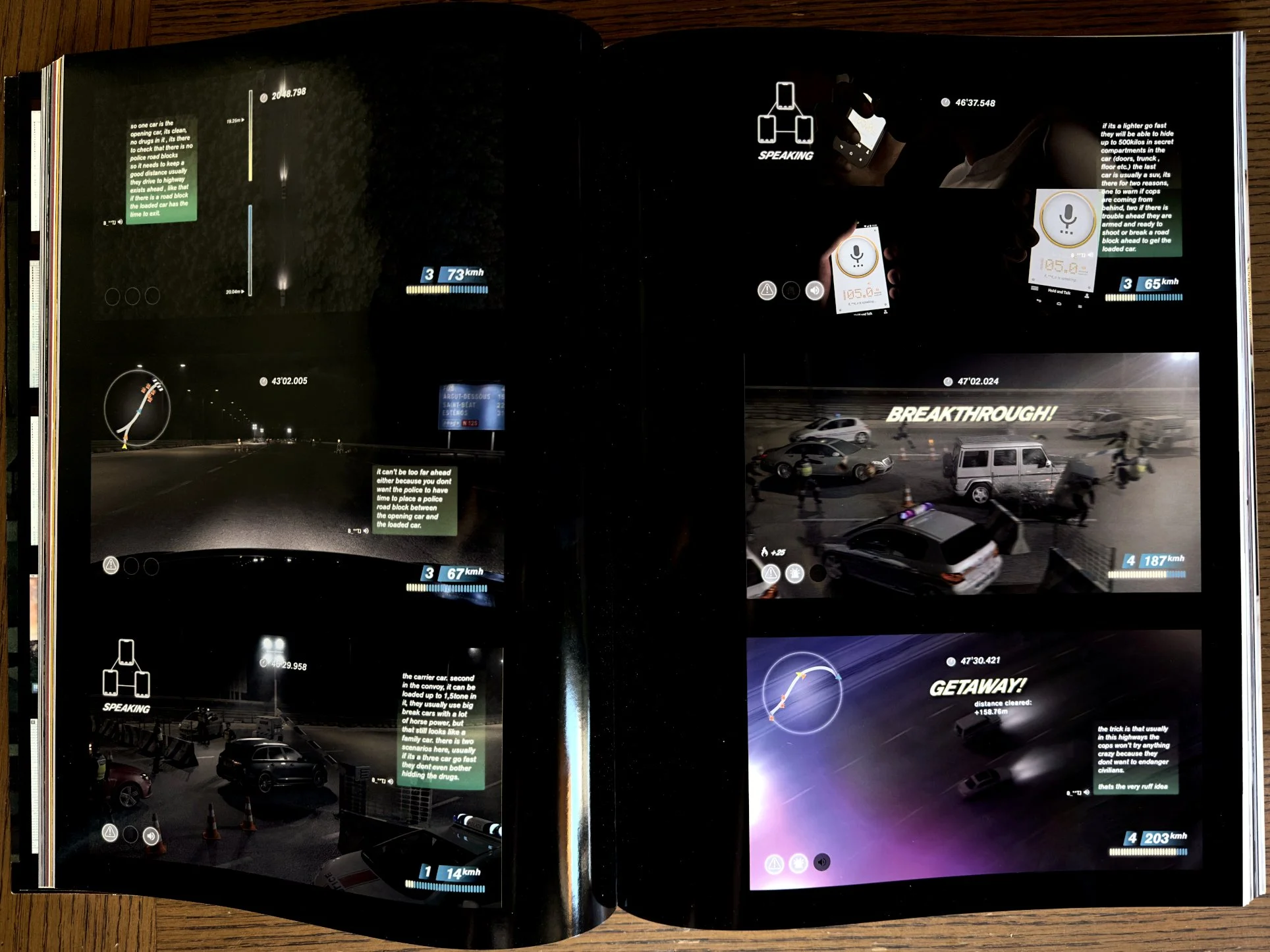
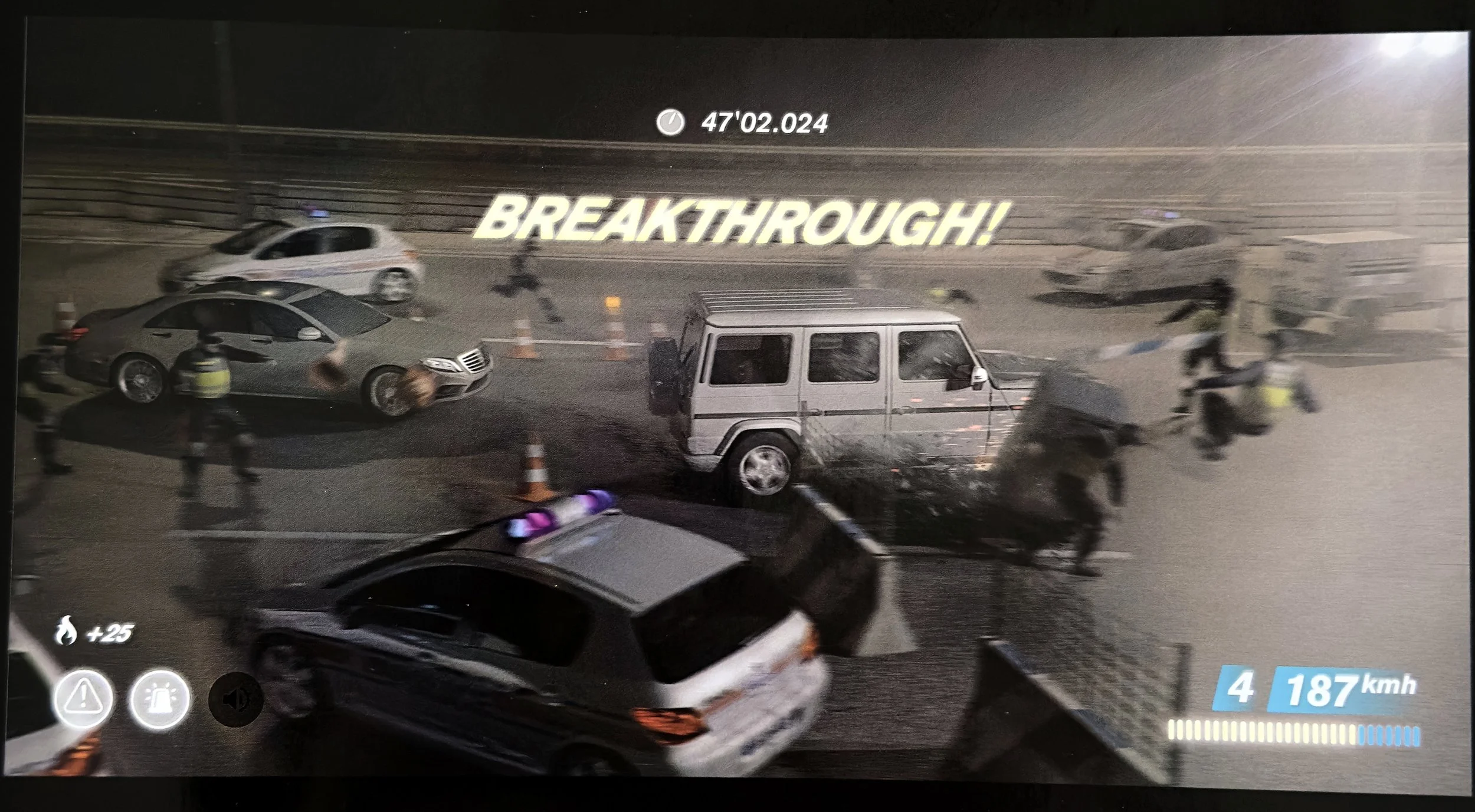
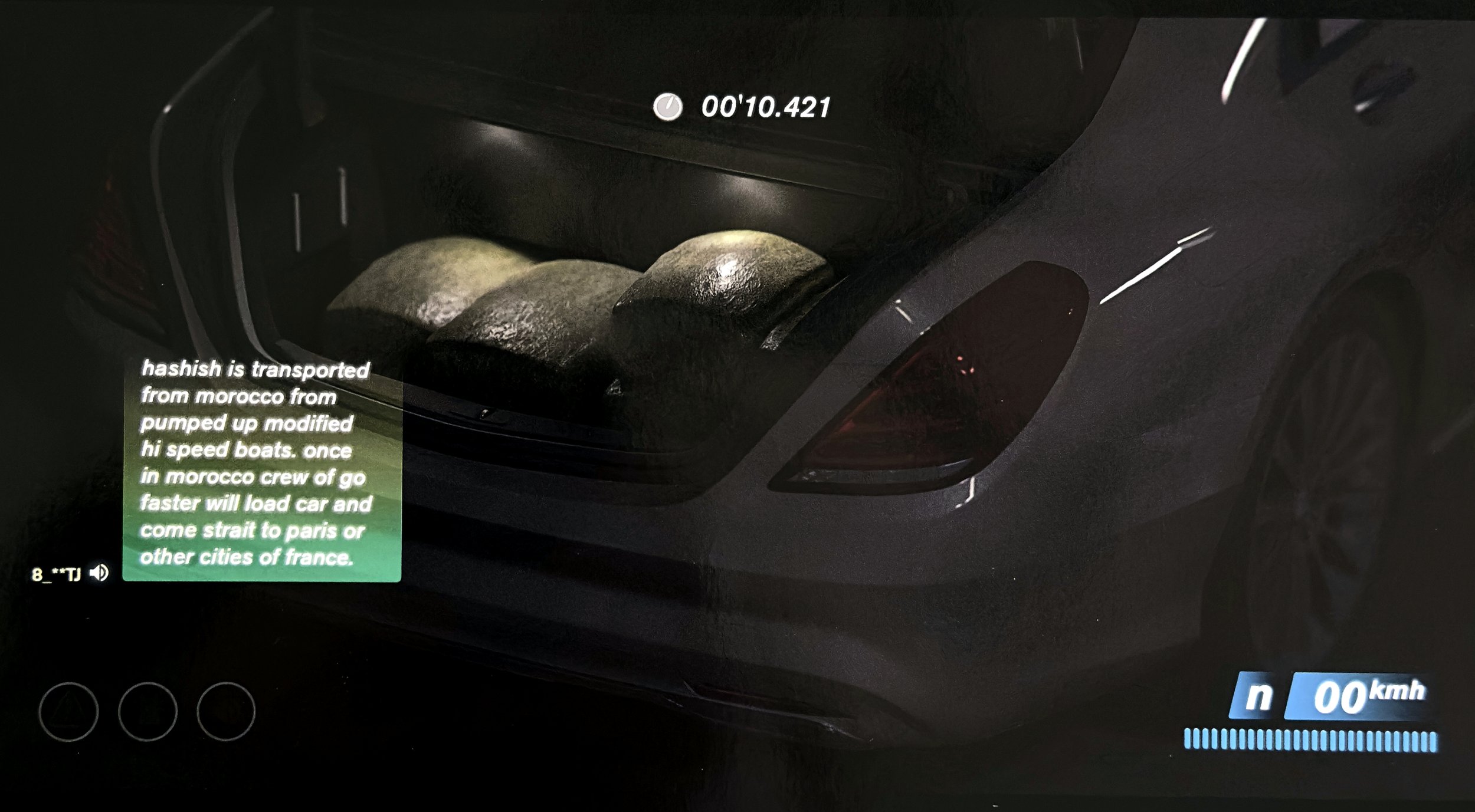
In Frank Ocean’s new magazine, Boys Don’t Cry, French film director Romain Gavras published a comic strip, titled “Le Go Fast,” featuring graphics by London-based visual artist Pablo Jones-Soler. It contains a series of text messages from a drug mule, identified as “8_**TJ,” who explains the process of trafficking products from Morocco in North Africa into France and the rest of Europe; the mule refers to the group of traffickers as “the go fast” crew. The comic’s nine panels form a timeline, with the elapsed minutes at the top of each segment. Hazard lights are visible in the bottom-left corners, while the operator’s car gear/speed is shown in the bottom-right.
Scans of the magazine pages and comic panels, along with a transcript, are available below.
Scans:
Select a photo below to view it fullscreen.
Transcript:
[00'03.351]
LE GO FAST.
START.
8_**TJ: So very ruffly this is what happens. Works the same for coke and hashish.
[n gear/00 kmh][00'10.421]
8_**TJ: Hashish is transported from Morocco from pumped-up modified hi-speed boats. Once in Morocco, crew of go faster will load car and come straight to Paris or other cities of France.
[n gear/00 kmh][15'38.933]
[Phones Synced]
8_**TJ: A crew of go fast is usually formed by three cars, they are all on open cell phones connected to each other (with burner phones with like 1000 euros credit in to last the whole journey). Sometimes they modify the cars with an extra tank of gaz to do the whole journey from south of Spain to Paris in one go without stopping at gaz station (as stopping is the biggest risk of getting caught).
[n gear/00 kmh][20'48.798]
8_**TJ: So one car is the opening car, it’s clean, no drugs in it. It’s there to check that there is no police roadblocks, so it needs to keep a good distance [19.25 m / 20.04 m], usually they drive to highway exists ahead, like that. If there is a roadblock, the loaded car has the time to exit.
[3 gear / 73 kmh][43'02.005]
8_**TJ: It can’t be too far ahead either because you don’t want the police to have time to place a police roadblock between the opening car and the loaded car.
[3 gear/67 kmh][46'29.958]
[Phones Speaking]
8_**TJ: The carrier car, second in the convoy, it can be loaded up to 1.5 tones in it. They usually use big break cars with a lot of horsepower, but that still looks like a family car. There is two scenarios here, usually if it’s a three-car go fast, they don’t even bother hiding the drugs.
[1 gear/14 kmh][46'37.548]
[Phones Speaking]
8_**TJ: If it’s a lighter go fast, they will be able to hide up to 500 kilos in secret compartments in the car (doors, trunk, floor, etc.). The last car is usually an SUV, it’s there for two reasons, one to warn if cops are coming from behind, two if there is trouble ahead, they are armed and ready to shoot or break a roadblock ahead to gel the loaded car.
[3 gear/65 kmh][47'02.024]
BREAKTHROUGH!
[4 gear/187 kmh][47'30.421]
GETAWAY!
[Distance cleared: +158.76 m]
8_**TJ: The trick is that usually in this highways the cops won’t try anything crazy because they don’t want to endanger civilians. That’s the very ruff idea.
[4 gear/203 kmh]
Related Articles:
In Boys Don’t Cry, Italian motorsport enthusiast and blogger Federico Aliprandi wrote a two-page editorial titled “Active Analysis on the Superiority of Lesser Objects,” in which he shares his views on 20 compact cars from various years, makes, and models.
Mikey Alfred, founder of the LA skate brand Illegal Civ, offers advice to readers of Boys Don’t Cry magazine based on their zodiac sign.
In Boys Don’t Cry, American writer Andrew Durbin presents a short story titled “You’ve Been Flirting Again,” paired with illustrations by Swedish visual designer Kilian Eng. It follows a man seeking romance in a world where technology has made travel and dating effortless. As a result, courtship has become superficial and simulated, like finding love on a reality TV show.
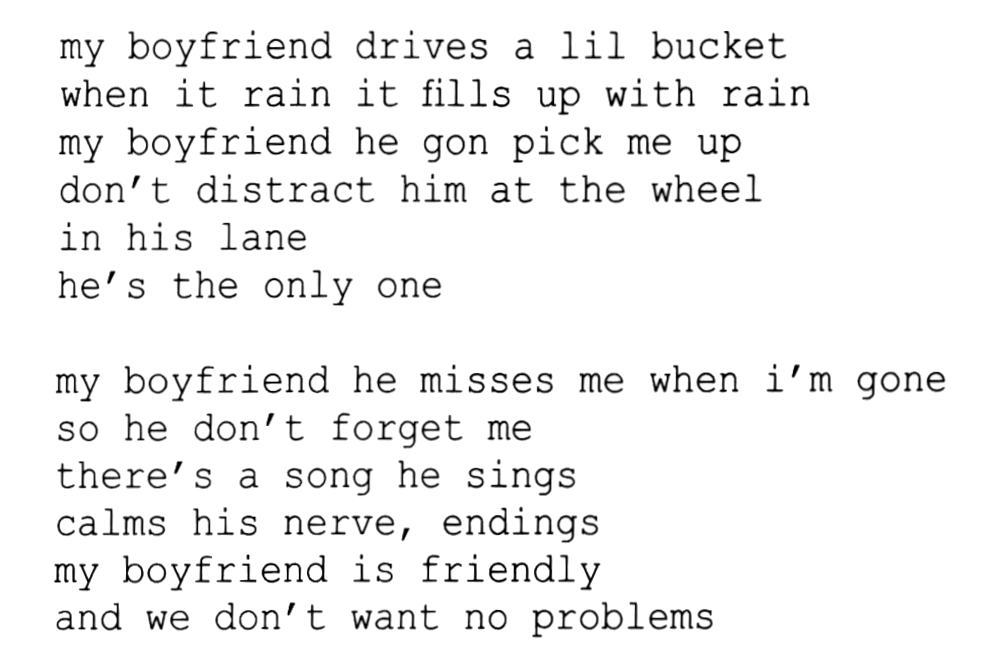
In his magazine, Boys Don’t Cry, Frank Ocean published a free-verse poem titled “Boyfriend.”
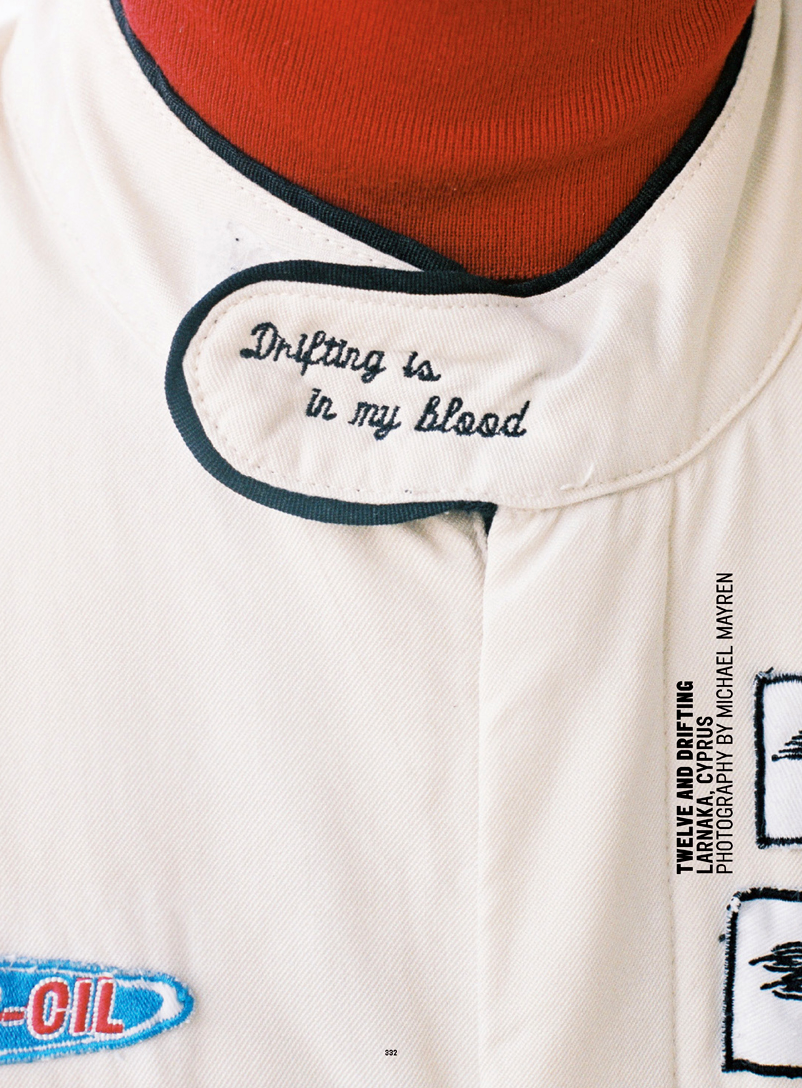
Boys Don’t Cry magazine features a series of images by British photographer Michael Mayren that captures amateur drivers at Achna Speedway, located near the City of Larnaka on the Mediterranean island of Cyprus.
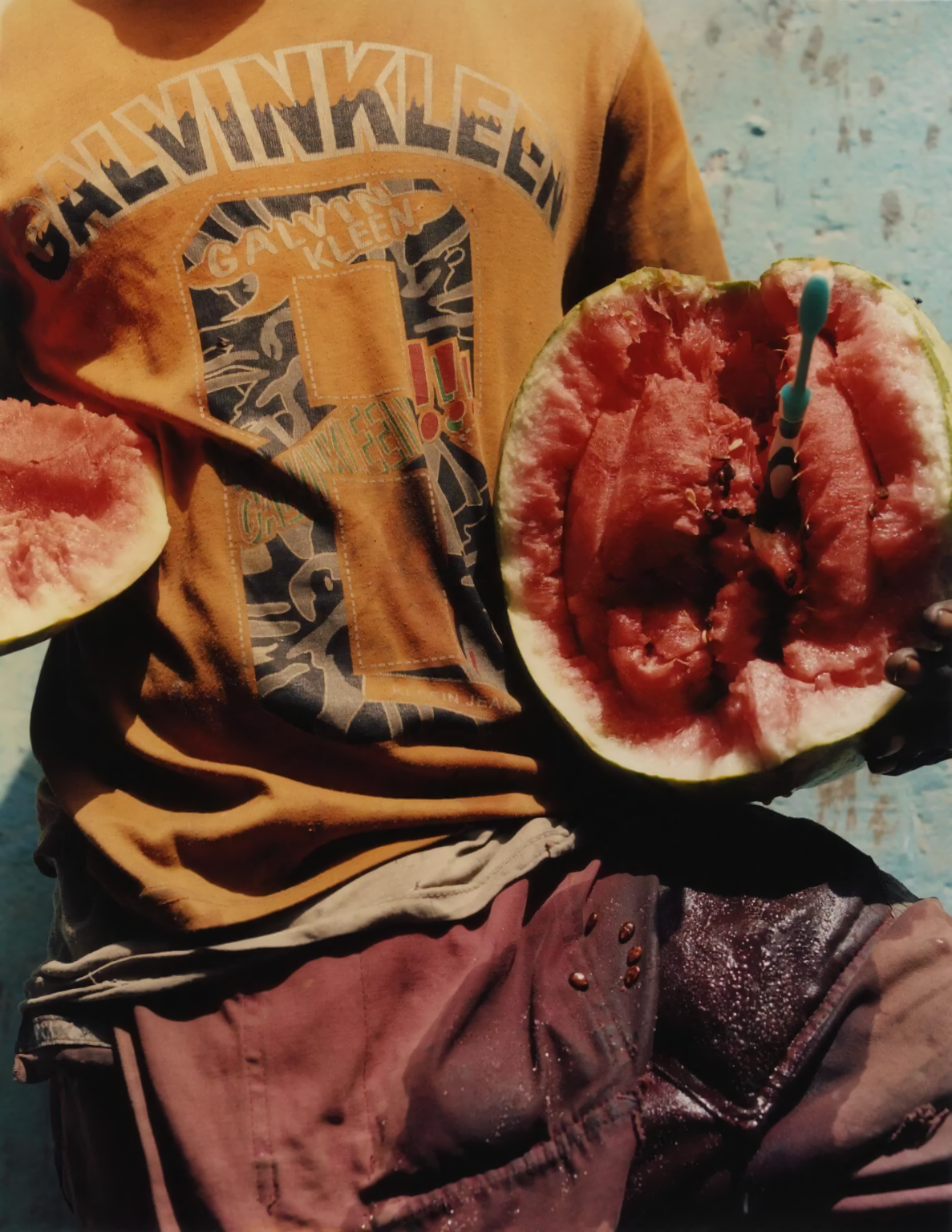
Frank Ocean’s zine features a photo series by London-based photographer Harley Weir that captures the people of Dakar, Senegal, located in West Africa. The models reenact quotes from various artists, poems, and performance art projects. Weir shot the images in 2015 under Ocean’s creative direction.
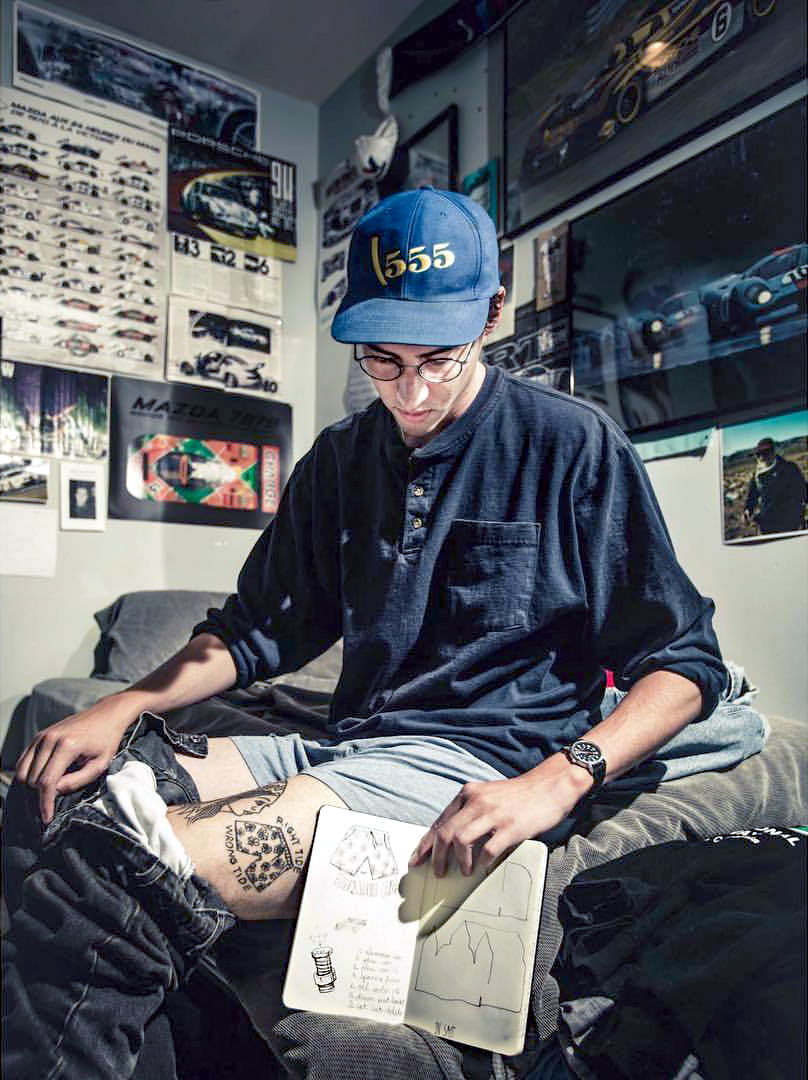
In Boys Don’t Cry, Italian car enthusiast and blogger Federico Aliprandi chats with amateur racecar driver and Ocean’s longtime friend Evan “Ed aka the Sloth” Clark, photographed by cinematographer Francisco Soriano. The two discuss a variety of topics, including car collections, manufacturers, drivers, engines, supercars, American muscle, and more.
Boys Don’t Cry includes a poem by English writer Kate Tempest that highlights the deaths and persecution of ‘brown-eyed men’ by police and others.
In his new magazine, Boys Don’t Cry, Frank Ocean published a photo series featuring a remote-control toy and “life-size” model BMW E30 M3 Sport Evolution. The photoshoot juxtaposes children playing with a small RC car and an adult driving a full-size version out of a large toy box.
In Boys Don’t Cry, British novelist Ben Brooks published a silly piece titled “Kimchi,” or “Partial List of Misappropriated Hood Ornaments,” which follows an 11-year-old painting prodigy named Elliot Vostock. The article includes two portraits by British photographer Michael Mayren and an illustration by American visual artist Eric Yahnker.
American photographer Jim Mangan captures Frank Ocean and his longtime friend Ray Buck driving amphibious all-terrain vehicles in the article “Crouching Tiger, Hidden Water Moccasin” in Ocean’s Boys Don’t Cry magazine. Mangan captured the photo series along Red Creek near Perkinston, Mississippi, in 2015.
In his new magazine, Boys Don’t Cry, Frank Ocean joins journalist Zing Tseng in interviewing composer Christophe Chassol and producer Om’Mas Keith in Paris, France. The foursome discusses music, identity, philosophy, and more. The piece features two paintings by visual artist Daniel David Freeman and photos by video director Nabil Elderkin.
In his new magazine, Boys Don’t Cry, Frank Ocean shared a verse and photographic series titled “Jumbo” that features his friend Ysham Jackson modeling outfits styled by fashion director Rita Zebdi. The series includes an image used on one of three magazine covers.
In his zine, Frank Ocean appears in a series by German photographer Wolfgang Tillmans titled “I’m a Morning Person,” captured in Berlin in January 2015. The piece includes four portraits, one of which is the cover photo of Boys Don’t Cry and its companion album, Blonde.
The lyrics in Frank Ocean’s zine list an unfinished, 12-track sequence of Blonde, including two songs omitted from the final album. The most notable artifact is the unreleased song “Easy,” which has lyrical similarities to “Self Control” and the Endless track “Hublots.” Also present are unique versions of “Nights” and “White Ferrari,” as well as “Mitsubishi Sony” from Endless.
In his zine, Frank Ocean explores the car scene in and outside of Tokyo in a photo series by Dutch artist Viviane Sassen titled “Foxface.” Notably, the editorial includes a portrait of Ocean wearing a racing helmet, which he used on one of three front covers for Boys Don’t Cry and two of four album covers for his companion project, Blonde.
An art piece in Boys Don’t Cry magazine offers a glimpse into the Internet-surfing habits of six notable figures, including Frank Ocean, rapper A$AP Rocky, singer James Blake, stylist Justin R. Saunders, and music producers Michael Uzowuru and Evian Christ. The article is titled “Bon Jovi Naked”—a tongue-in-cheek reference to a Google search for Jon Bon Jovi’s 1997 track “Naked.”
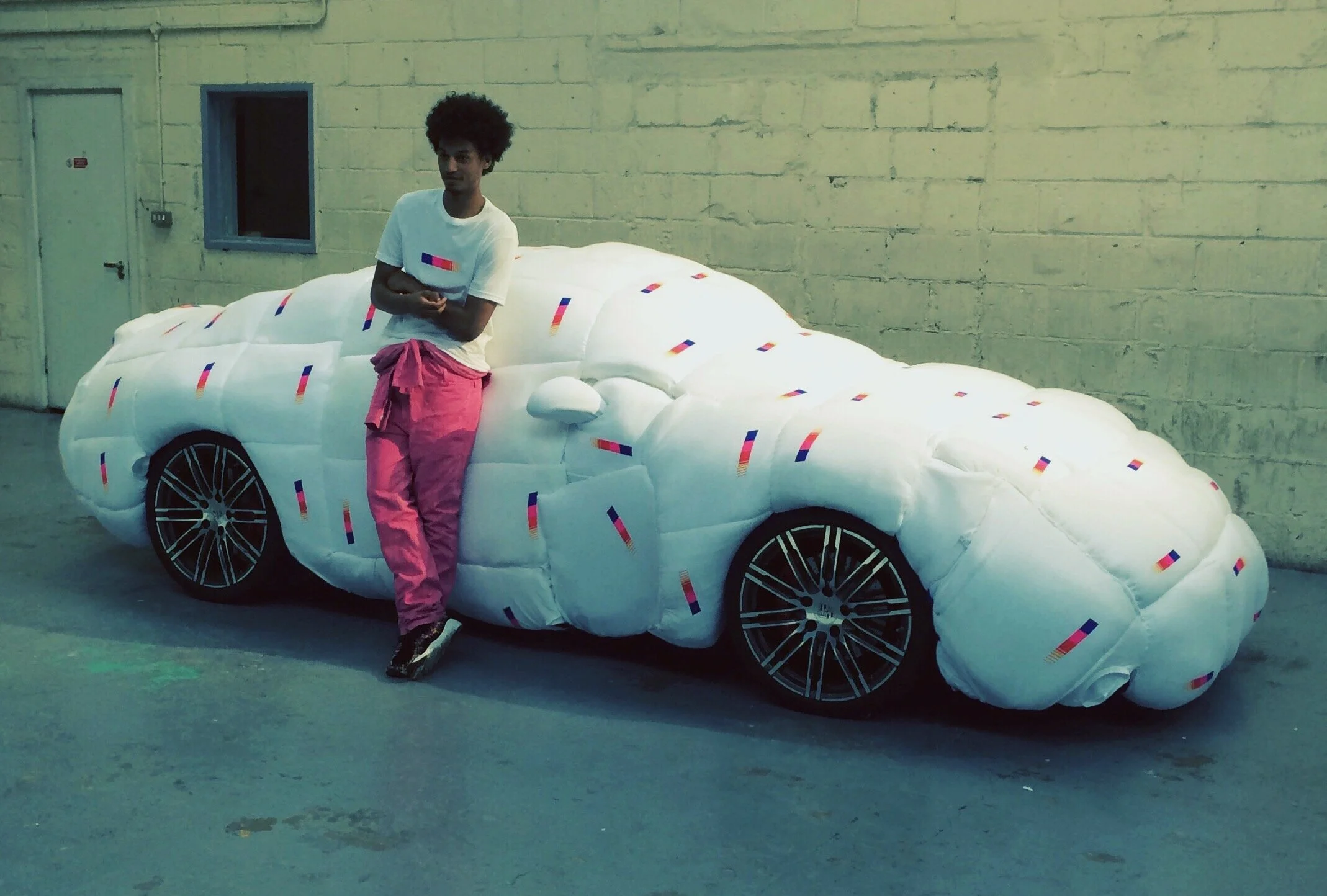
In his magazine, Boys Don’t Cry, Frank Ocean published a photo series featuring sports cars crafted from hoodies, sweatshirts, and T-shirts by London-based visual artist Gary Card.
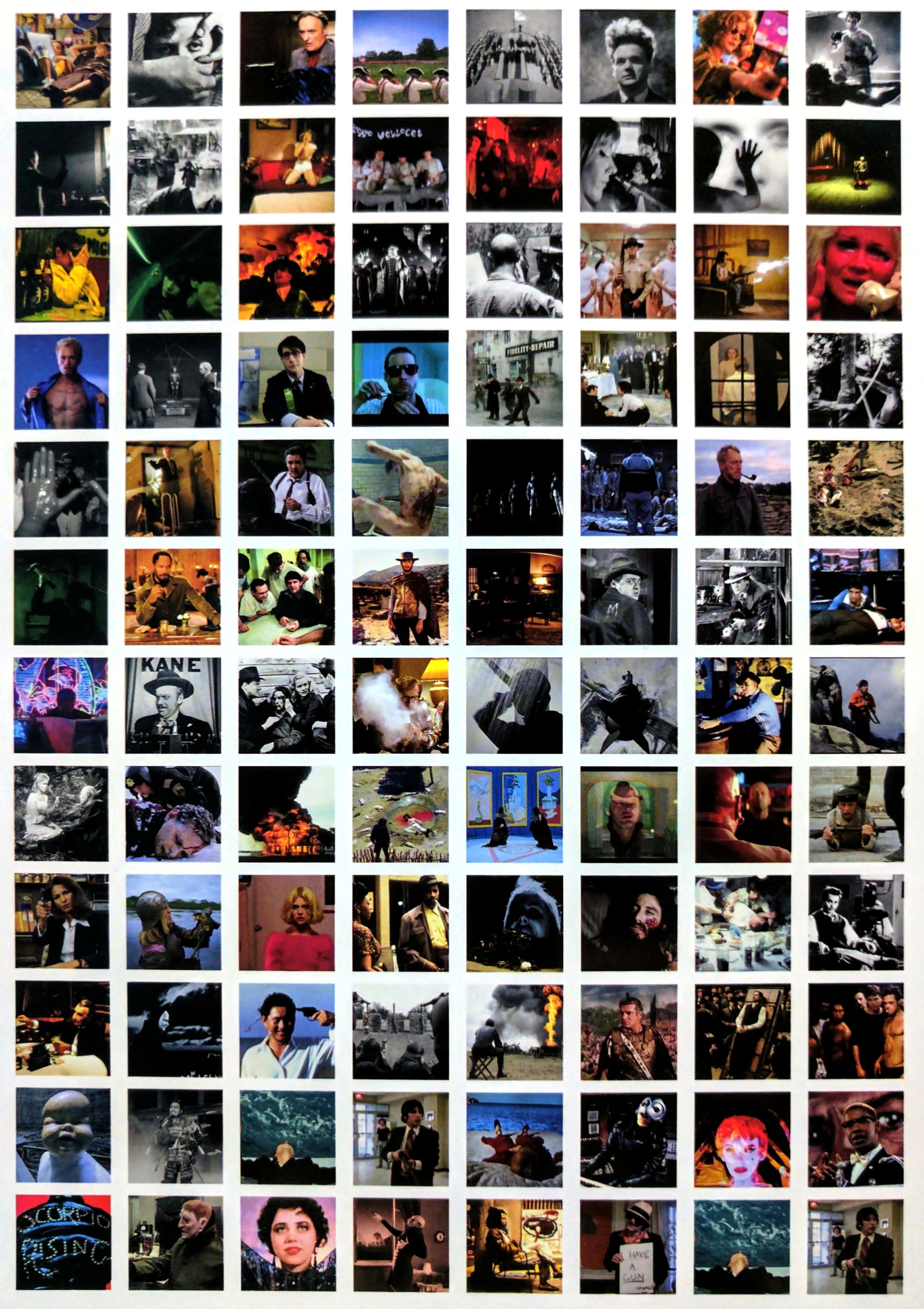
Frank Ocean shared a catalog of 100 films and 50 tracks in his zine, including some interesting selections across various genres.
In Frank Ocean’s new magazine, Boys Don’t Cry, video director Tyrone Lebon published a photo series titled “I Shot a Video for Fun,” which showcases his production of the music video for “Nikes.”
In Boys Don’t Cry magazine, French film director Romain Gavras published a comic strip featuring graphics by London-based artist Pablo Jones-Soler. It contains a series of text messages from a drug mule, who explains the process of trafficking product from Morocco into France and the rest of Europe.
“Tricolor” uses transportation as a metaphor for Tyler’s success and ambition. The two-page spread in Boys Don’t Cry magazine also features pictures of him and his cream colored BMW M3 E30.
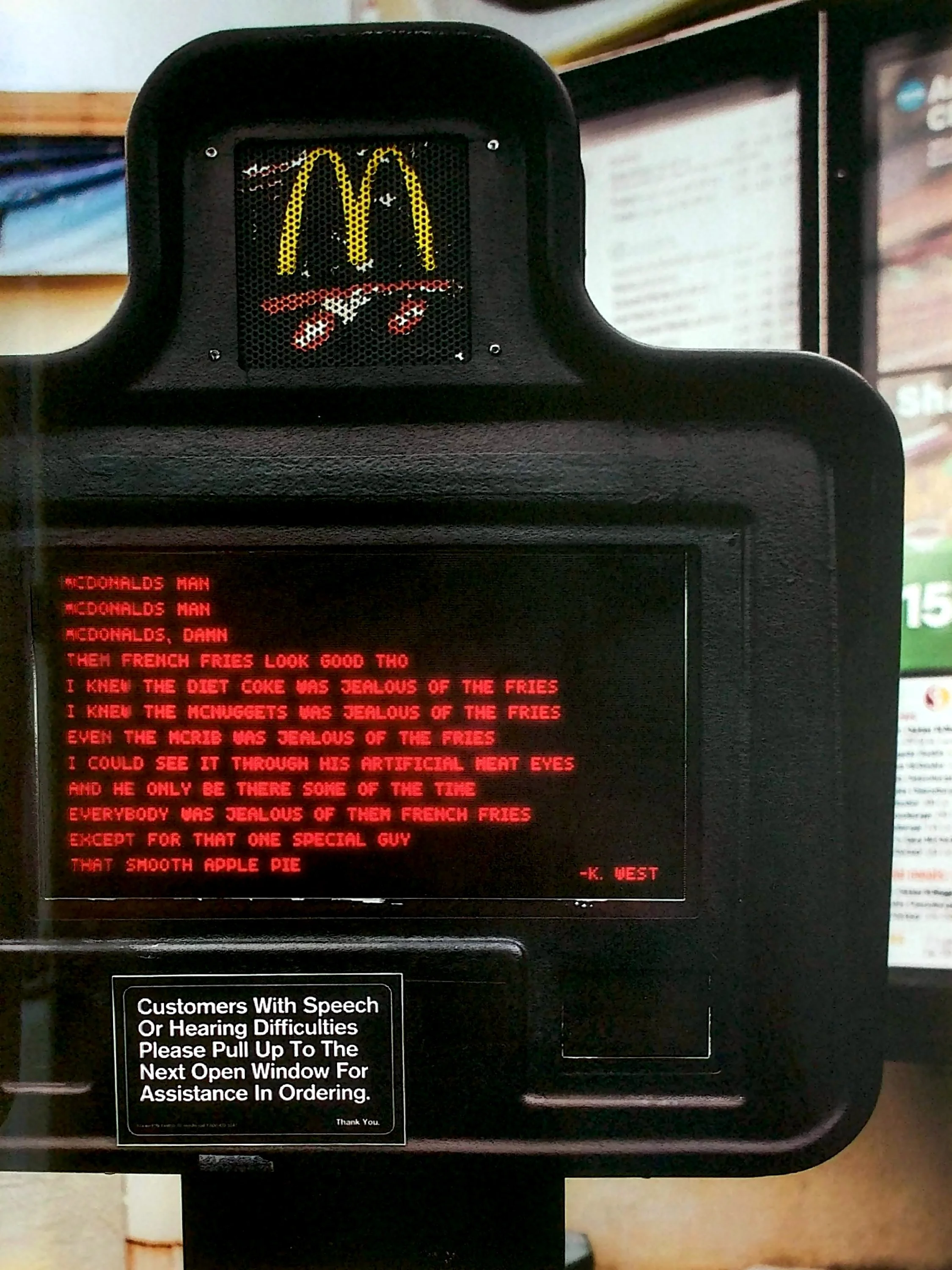
Boys Don’t Cry magazine includes a poem by Kanye titled “The McDonald’s Man,” which details french fries, cheeseburgers, and other items on the menu conspiring against each other. The piece features photos by Nabil Elderkin that capture West driving his Lamborghini up to a franchise location in Calabasas and speaking his verses onto the drive-thru’s order screen.
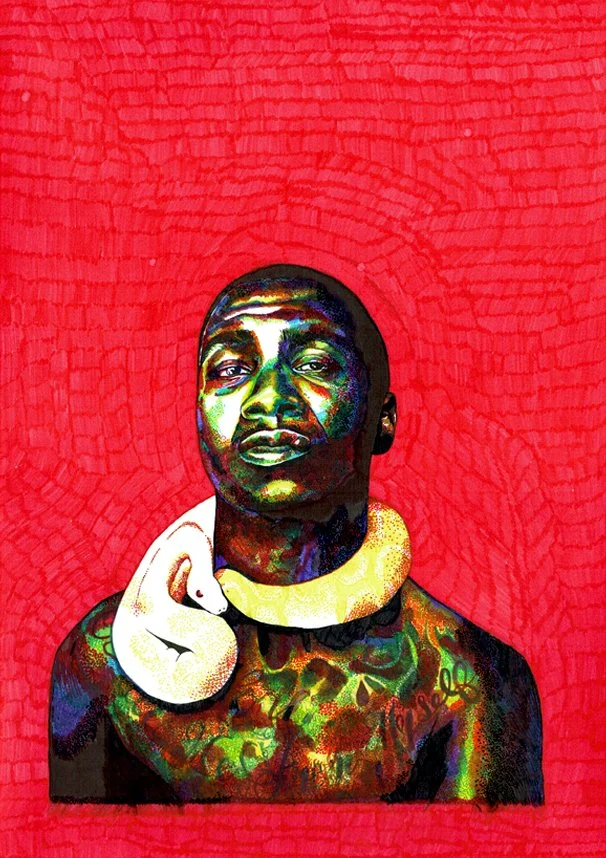
In his new magazine, Boys Don’t Cry, Frank Ocean published an interview featuring rapper Lil B, aka BasedGod, and Illegal Civ founder Mikey Alfred. The trio discusses music, money, internet culture, and more, over eight pages. The article, titled “Holy Combat,” includes a painting of Lil B with a snake around his neck by London-based artist Daniel David Freeman.
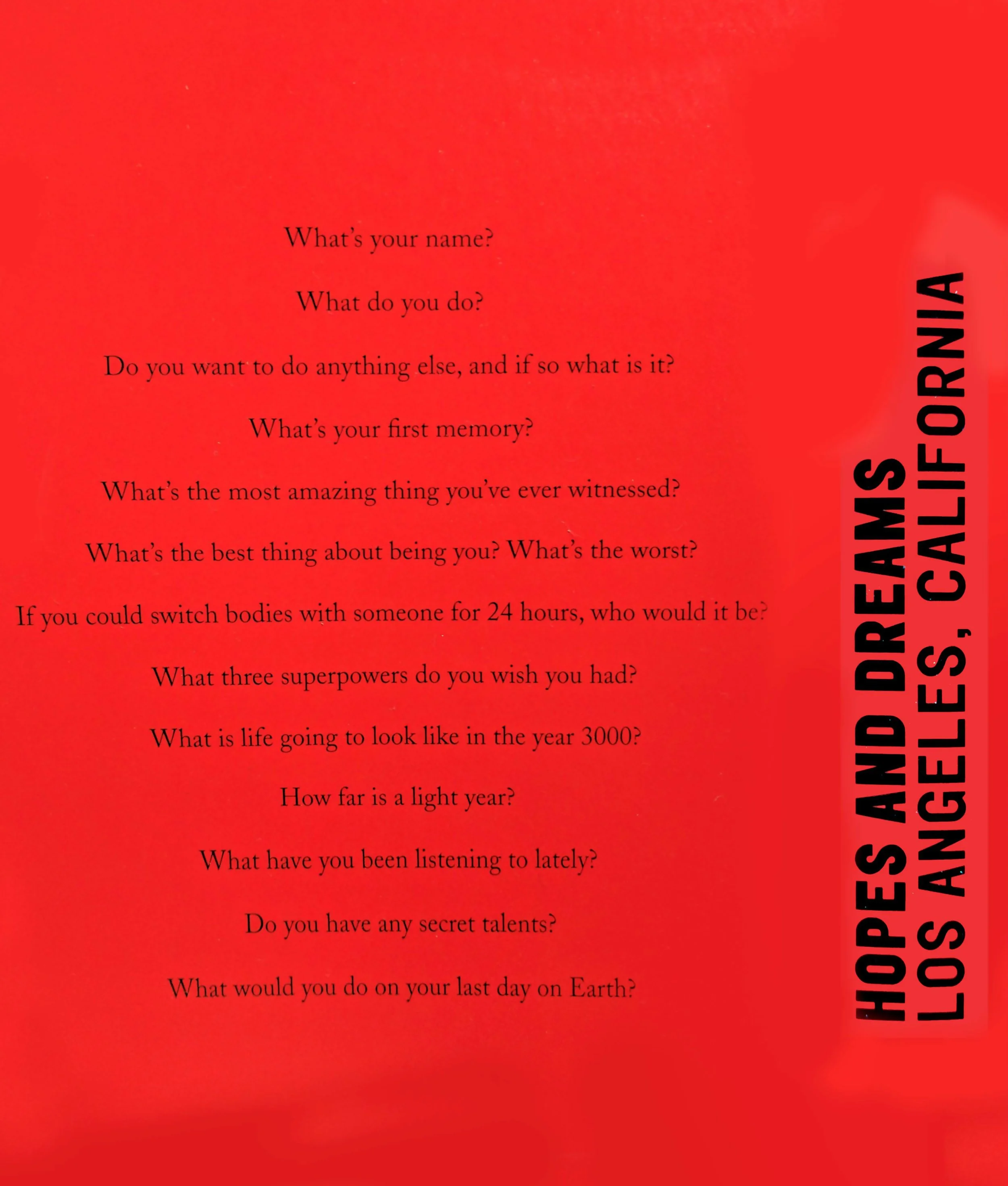
Boys Don’t Cry features a series of interviews by Illegal Civ founder Mikey Alfred with five of Ocean’s other friends in LA around 2012 or 2013, titled “Hopes and Dreams.” Recordings from these sessions were sampled in Ocean’s song “Futura Free,” which closes out his companion album, Blonde. The interviewees include his brother, Ryan Breaux; Illegal Civ skaters Sage Elsesser and Na’kel Smith; and friends Brahim Hariri and Evan Clark.
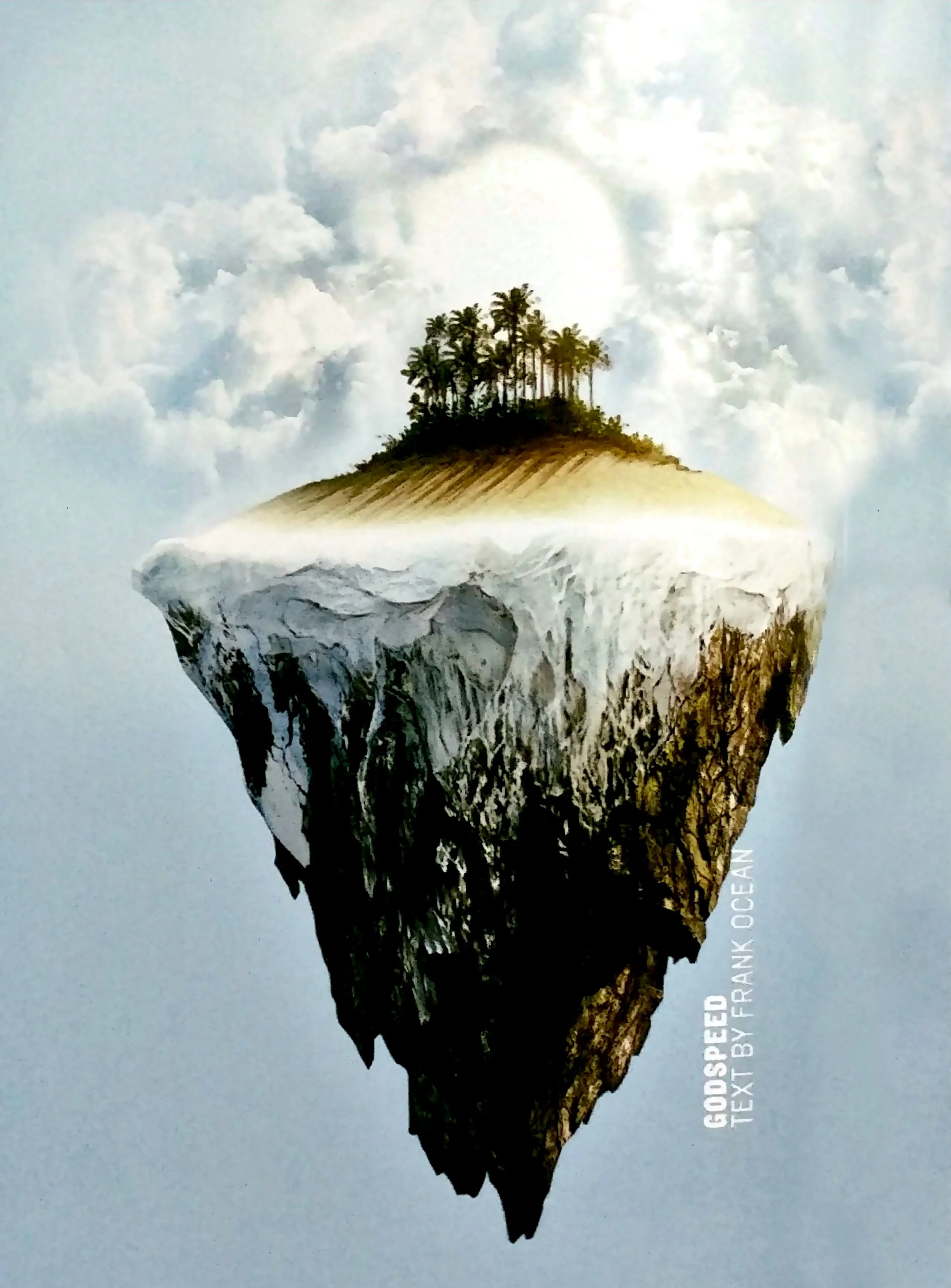
In his new magazine, Boys Don’t Cry, Frank Ocean published a six-part screenplay titled Godspeed. The story follows Steely, a “charismatic and well-liked, but emotionally guarded” boy, alongside his friends. Oceans describes the play as a ‘reimagined part of his boyhood.’
In Boys Don’t Cry magazine, Frank Ocean included a photoshoot with friends camping outside Munich, Germany. The series includes an image of his friend smoking in a car, which he used on one of the three digital album covers for Blonde. The piece also samples a text by American neo-conceptual artist Jenny Holzer titled Truisms.
Inside Frank Ocean’s Boys Don’t Cry magazine, journalist Danna Takako talks to the voice of the 2016 Blonde track “Be Yourself” and 2012 Channel Orange track “Not Just Money.” In the article, titled “This Is Mom,” Takako asks Watson about her son’s friendship with Ocean—including how it led Ocean to first record his music—as well as her motherly phone calls and advice.
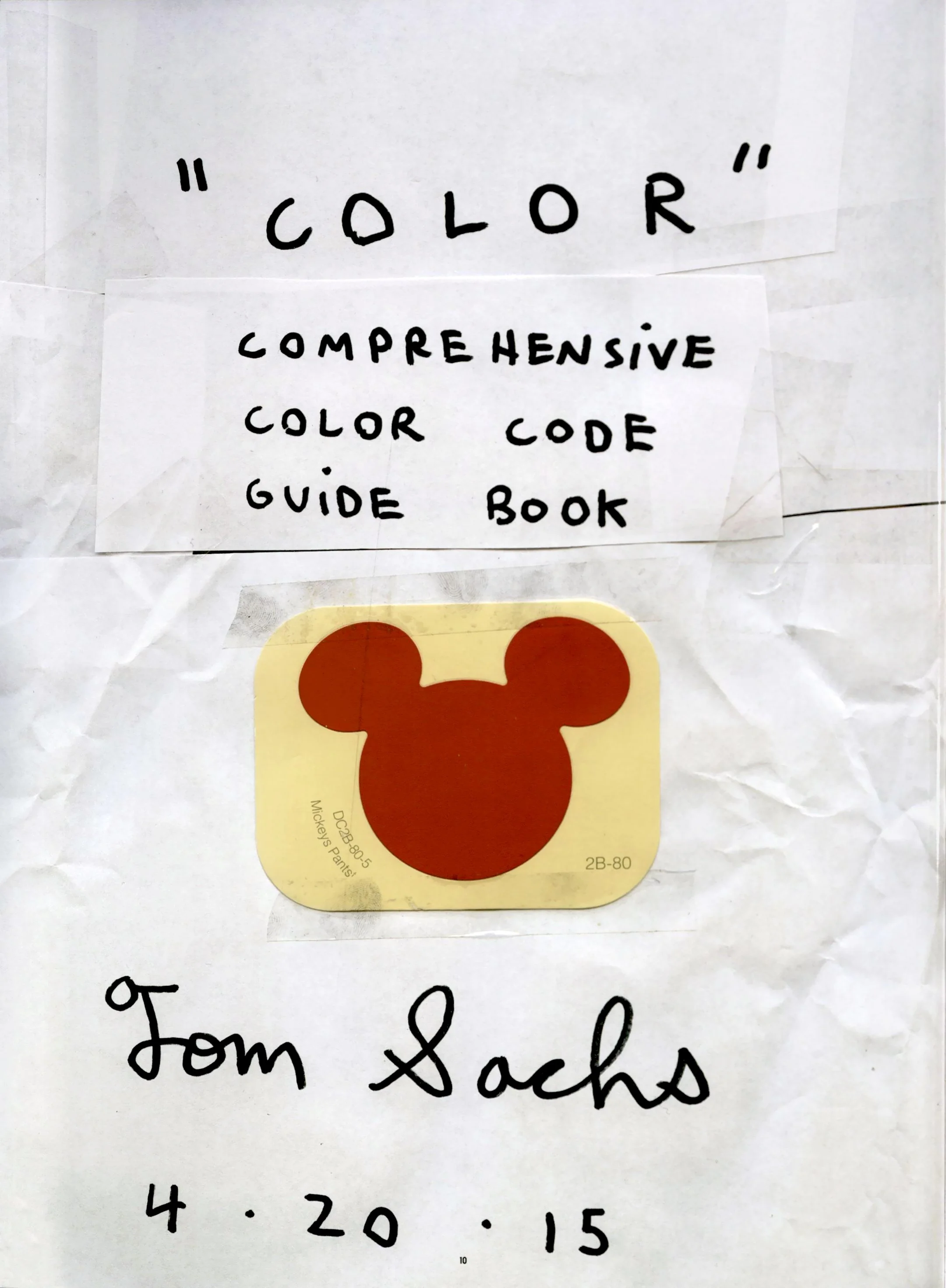
In Boys Don’t Cry, artist Tom Sachs outlines the acceptable (and forbidden) paints and hues used in his NYC studio. The article is a print adaptation of his 2011 film Color.
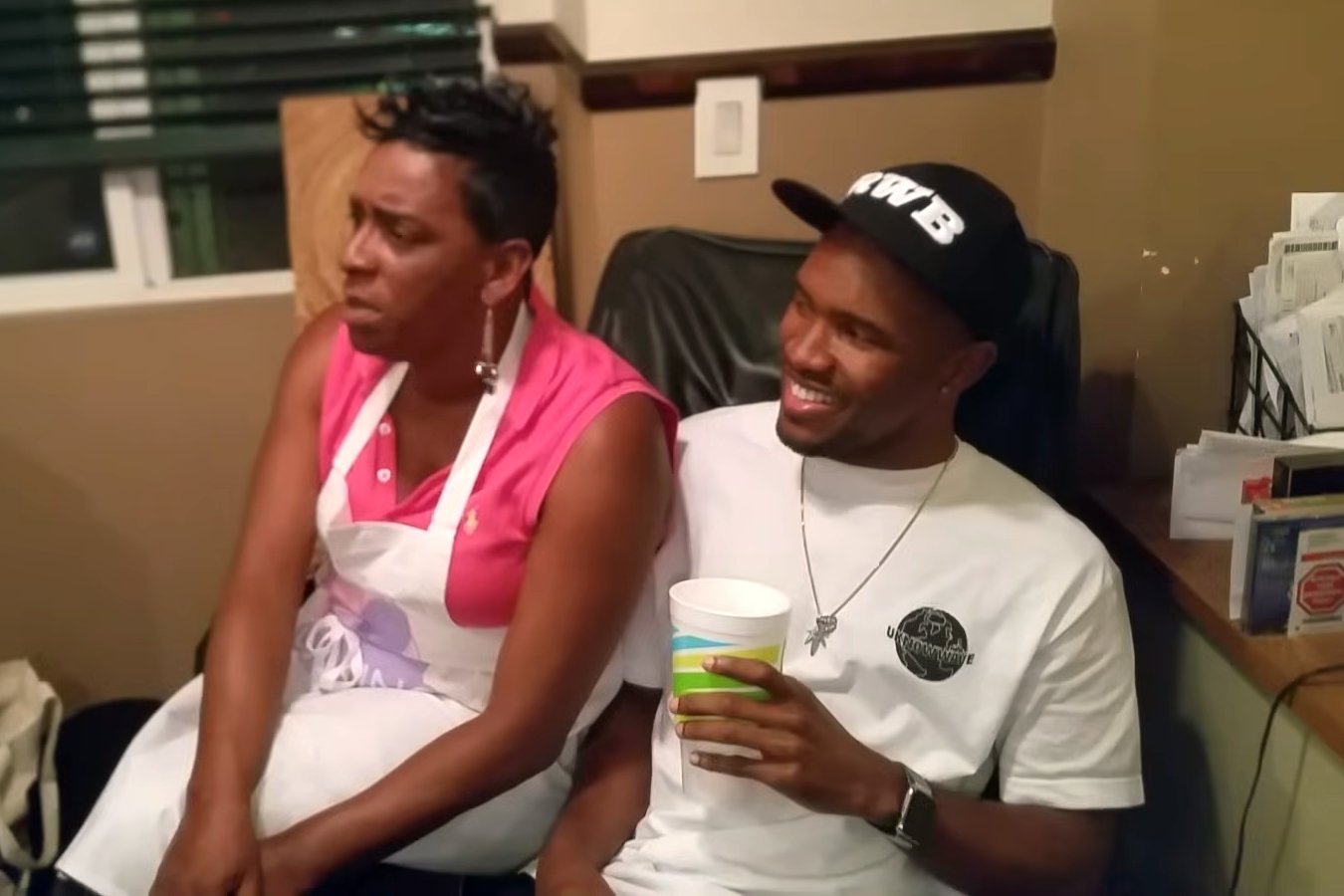
Boys Don’t Cry magazine features a brief exchange with chef and YouTube personality Felicia “Auntie Fee” O’Dell. She recounts an anecdote about rescuing Frank Ocean late one night, after he ran out of gas on the Santa Monica Freeway.
In Boys Don’t Cry, American writer Andrew Durbin presents a short story titled “You’ve Been Flirting Again,” paired with illustrations by Swedish visual designer Kilian Eng. It follows a man seeking romance in a world where technology has made travel and dating effortless. As a result, courtship has become superficial and simulated, like finding love on a reality TV show.
In Boys Don’t Cry, British novelist Ben Brooks published a silly piece titled “Kimchi,” or “Partial List of Misappropriated Hood Ornaments,” which follows an 11-year-old painting prodigy named Elliot Vostock. The article includes two portraits by British photographer Michael Mayren and an illustration by American visual artist Eric Yahnker.
In Boys Don’t Cry magazine, French film director Romain Gavras published a comic strip featuring graphics by London-based artist Pablo Jones-Soler. It contains a series of text messages from a drug mule, who explains the process of trafficking product from Morocco into France and the rest of Europe.
In his new magazine, Boys Don’t Cry, Frank Ocean published a six-part screenplay titled Godspeed. The story follows Steely, a “charismatic and well-liked, but emotionally guarded” boy, alongside his friends. Oceans describes the play as a ‘reimagined part of his boyhood.’
Boys Don’t Cry magazine features a brief exchange with chef and YouTube personality Felicia “Auntie Fee” O’Dell. She recounts an anecdote about rescuing Frank Ocean late one night, after he ran out of gas on the Santa Monica Freeway.