Frank Ocean legally changes his name to Frank Ocean
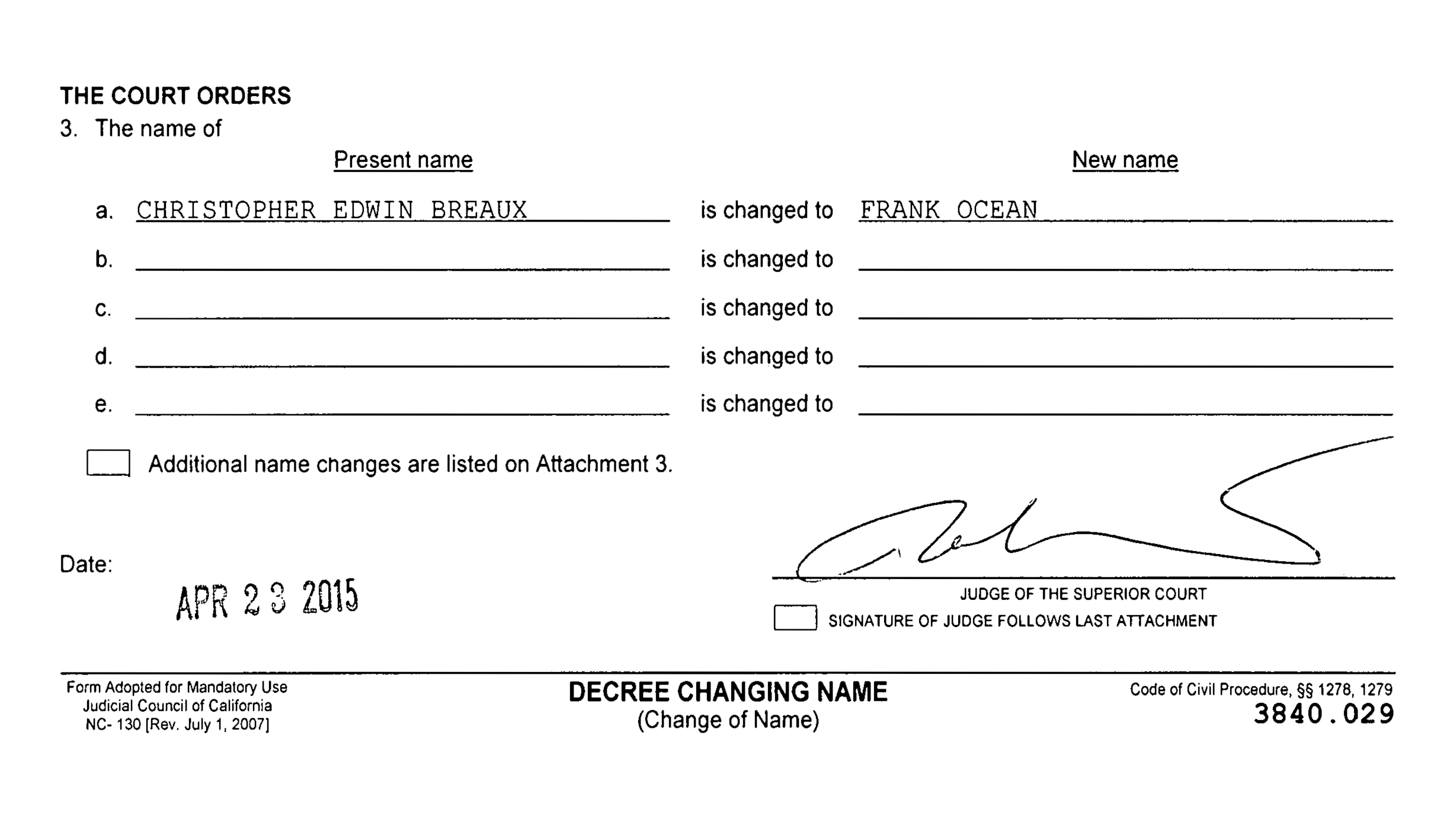
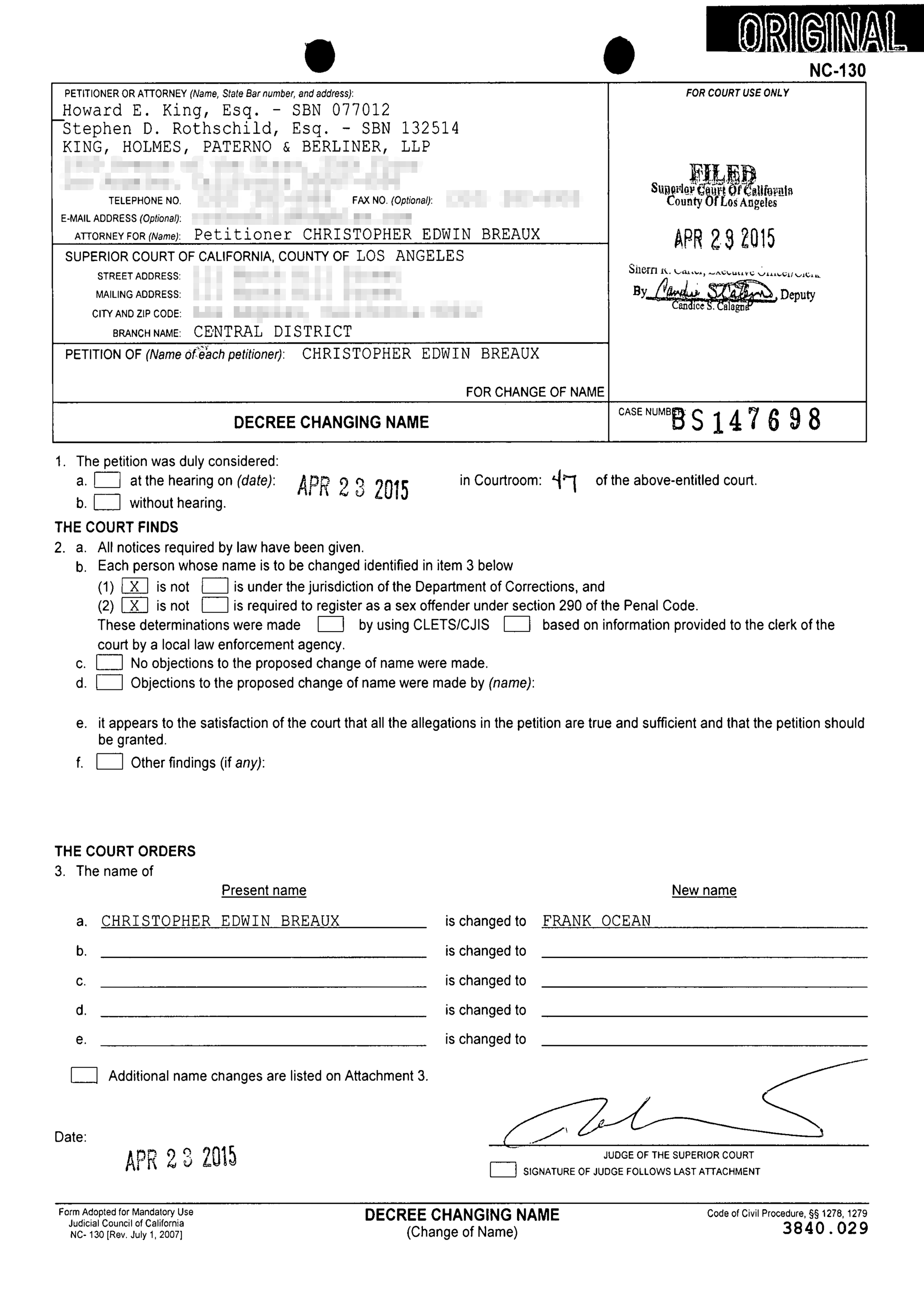
Superior Court of California County of Los Angeles*
Christopher Edwin “Lonny” Breaux has officially changed his legal name to the alias he adopted five years ago: Frank Ocean.* The moniker is said to be “cobbled out of various tributes to Frank Sinatra, the 1960 film Ocean’s 11, and a pimp-like character he created to razz a friend at a party,” according to a 2011 profile by The Fader.
A Los Angeles County Court judge granted Ocean’s petition five years after he filed his initial form on his 23rd birthday on October 28, 2010. His previous attempts to change his name to Christopher Francis Ocean were unsuccessful due to improper filings, unpaid traffic tickets, and other driver’s license issues.
He first mentioned his desire to ditch his birth name in a 2011 interview with Complex, when reporter Ernest Baker asked if he was related to British R&B singer Billy Ocean; he replied:
Billy Ocean is my uncle… I’m just f-cking with you. The name Frank Ocean was born—allow me to tell that story another time, but I will say this: I changed my name on my birthday last year. It was the most empowering sh-t I did in 2010, for sure. I went on LegalZoom and changed my f-cking name. It just felt cool. None of us are our names. If you don’t like your name, then change your name. I’m only a few steps into the process, so I probably shouldn’t even be talking about this, but by the beginning of summer, I’ll be straight. I’ll be boarding planes as Christopher Francis Ocean.
It finally became official on April 23, 2015: the artist formerly known as Lonny Breaux, age 27, is now boarding planes as Frank Ocean.
Update 2019-04-16:
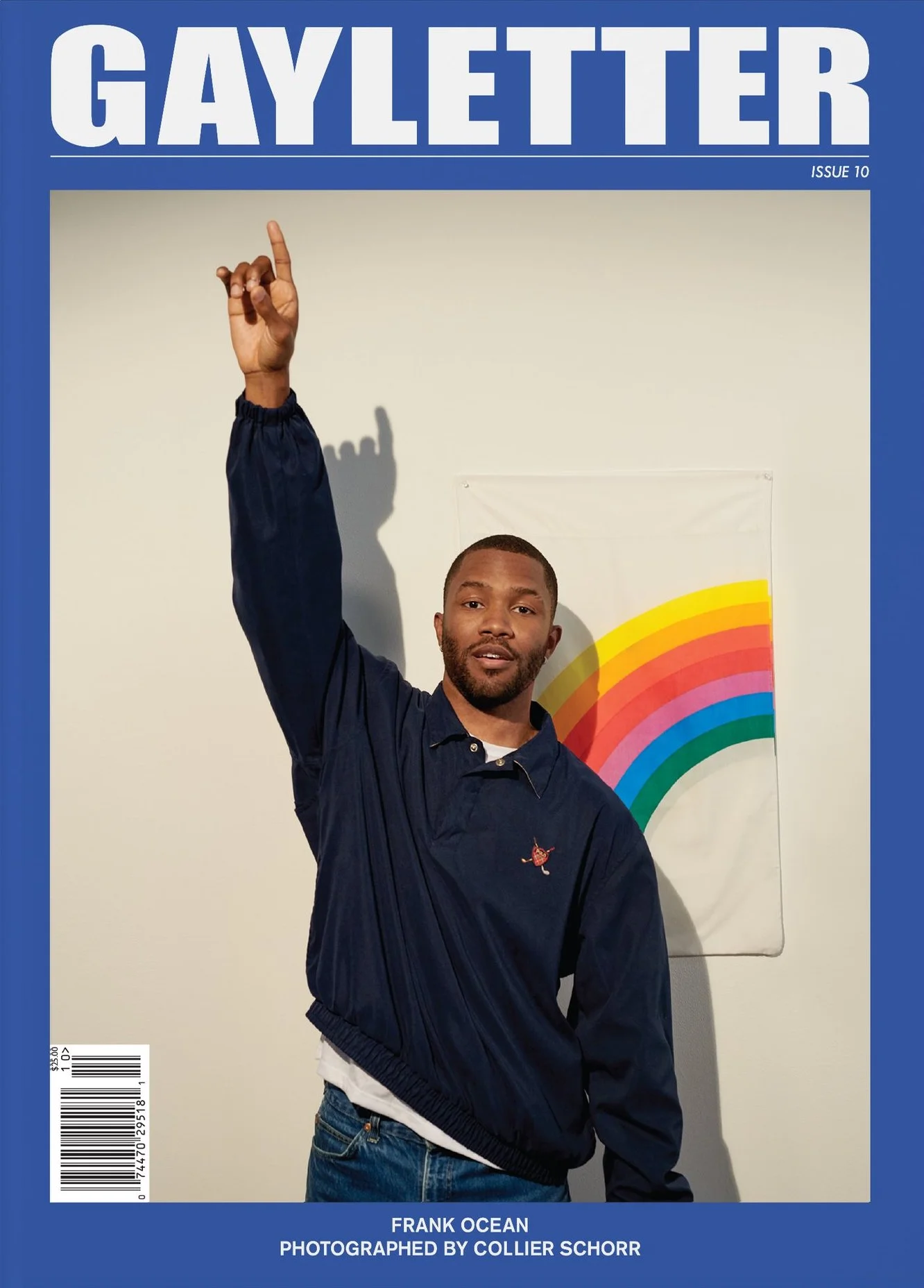
Frank Ocean added more context to his name change in an April 2019 interview with Gayletter, revealing that it was initially done as a cover in order to “make a project without my label knowing about it”—probably referring to his 2011 debut album, Nostalgia Ultra. In 2010, Ocean had grown frustrated with Def Jam after he signed to Tricky Stewart’s imprint label RedZone, only to be immediately shelved, forcing him to make a name for himself on his own. Alternatively, he could be referring to his later change-of-name petitions in 2014 and 2015, while developing his two 2016 projects, Endless and Blonde—the former album would ultimately free him from his Def Jam contract. Ocean tells journalist Tom Jackson:
The genesis of the name change came from me trying to make a project without my label knowing about it. It was born from a need. It came about in such a way that I didn’t think about whether it was armor for me. I hear certain people say that about their name, their look, even their sound, that it’s a form of armor or a shield from whatever pain they might not want to feel. I don’t think that was it, though. I was just trying to be slick, so I could do what I was doing without people knowing. And it worked. I kept with it. I’m such a part of the generation that’s influenced by rap and hip-hop. For me, those sorts of names are so commonplace in the genre and in the culture, so it felt correct.
Update 2021-08-06:
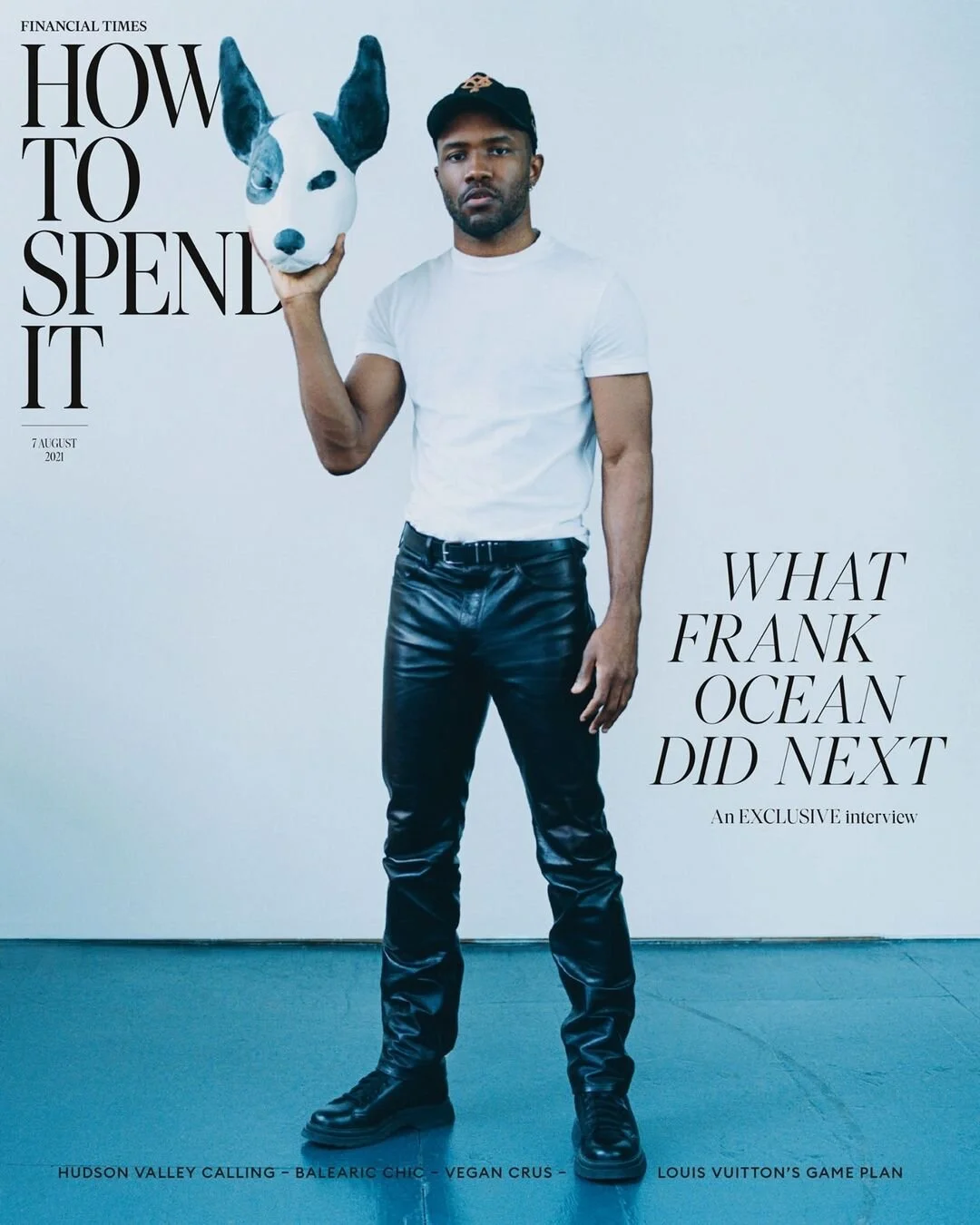
Frank Ocean expanded on his motivations for abandoning his last name in a story for the Financial Times’ How To Spend It magazine, covering the launch of his luxury company, Homer. Ocean tells Mark C. O’Flaherty:
It’s never lost on me that my surname is a by-product of slavery in the US. [Breaux is a common surname in Louisiana, where French colonists brought enslaved African people after 1718.] It’s never lost on me that I don’t have access to my real name. I can’t trace my heritage back that far, which is why I am interested in creating things that are mine, stay mine, and belong to my family. Things that I can pass on.
FOOTNOTES:
*Although the 2015 petition lists Frank Ocean’s legal name as “Frank Ocean,” in practice, he also uses his original formal rendering, “Christopher Francis Ocean,” for official documents and music credits.
Related Articles: